

Today’s customers don’t think in terms of “online shopping” and “in-store shopping.” They simply expect to shop when, where, and how it’s most convenient for them.
A customer might discover a product on social media, research it online, visit a store to see it in person, and ultimately place an order for home delivery. Or they may purchase online and stop by the store later that day for pickup.
This connected shopping experience is known as omnichannel retail, and the physical store plays an important role in making it work.
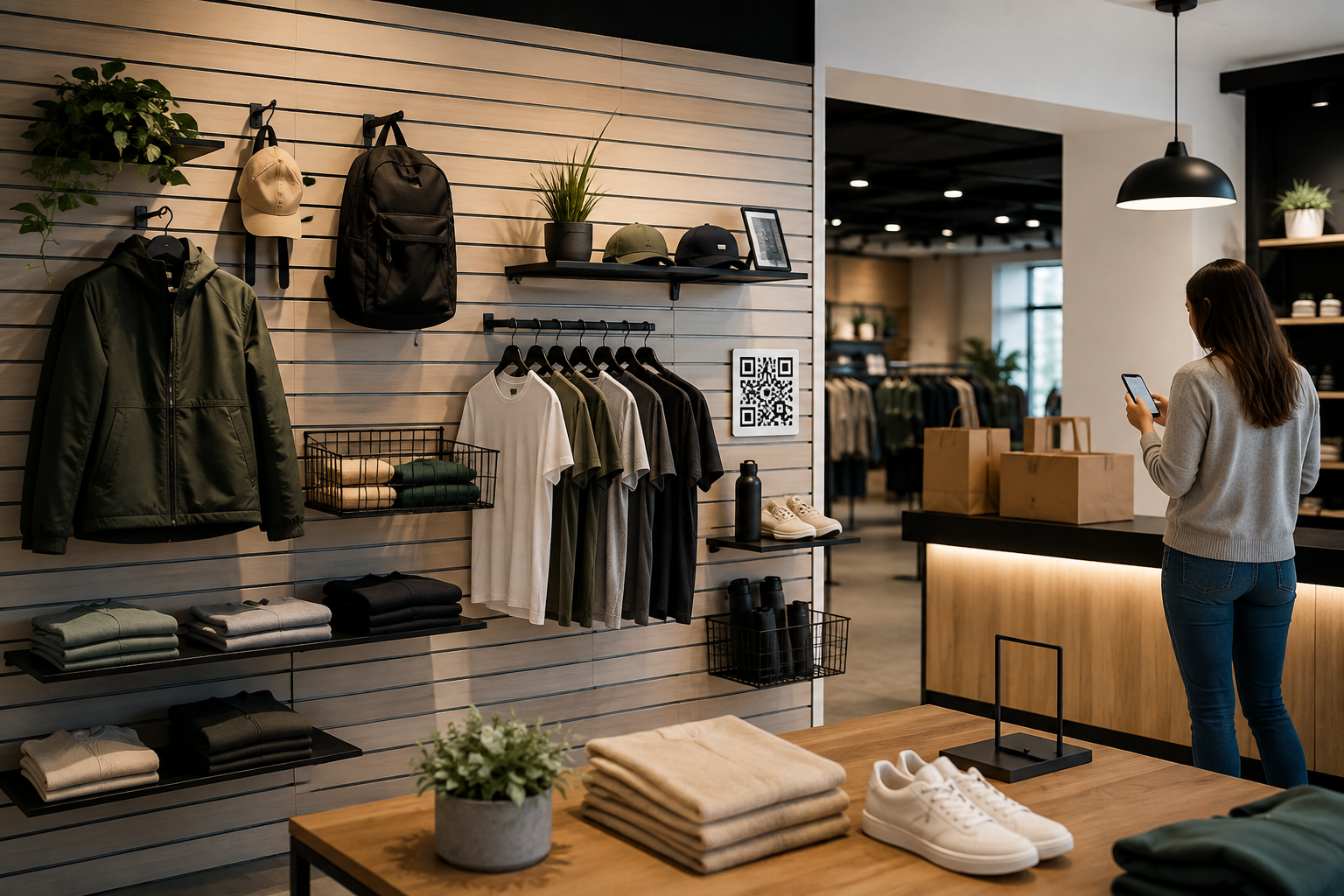
While technology often gets most of the attention in an omnichannel strategy, store fixtures matter too. Slat walls provide the flexibility retailers need to keep physical spaces organized, adaptable, and connected to the larger customer experience.
What Is Omnichannel Retail?
Omnichannel retail connects a business’s different sales and communication channels to create a more seamless customer experience.
Rather than treating a website, social media account, physical store, mobile experience, and pickup service as separate pieces, an omnichannel approach brings them together.
For customers, that could mean:
- Buying online and picking up in store
- Checking product availability before visiting
- Seeing an online promotion reflected in the store
- Returning an online purchase at a physical location
- Discovering additional products while picking up an order
- Scanning a QR code in store to access more sizes, colors, information, or inventory
The goal is consistency. No matter where customers interact with a retailer, the experience should feel connected.
The Physical Store Is Still Part of the Journey
Omnichannel retail doesn’t make the physical store less important—it often asks the store to do more.
A retail location may now function as a showroom, traditional shopping environment, pickup destination, return center, fulfillment point, and brand experience all at once.
That means retailers need spaces that can change quickly.
Permanent displays and inflexible fixtures can make those adjustments difficult. Slat wall systems provide a versatile foundation that can evolve as merchandise, promotions, inventory, and customer needs change.
1. Create Flexible Product Displays
Online merchandising can be changed with a few clicks. Physical merchandising isn’t quite that simple—but slat walls can make it significantly easier.
Shelves, hooks, baskets, brackets, and other accessories can be moved or replaced without completely rebuilding a display.
If an item suddenly becomes popular online, retailers can quickly give it more visibility in the store. If inventory changes, displays can be reorganized to accommodate what’s available.
That flexibility helps the physical store respond to what’s happening across other sales channels.
2. Highlight Products Customers Discover Online
Customers often arrive at a store already knowing what they’re looking for.
They may have seen a product on Instagram, received it in an email, noticed it on the retailer’s website, or added it to their online cart.
Strategic slat wall displays can help customers quickly locate these recognizable products.
Retailers can create dedicated sections for:
Trending Online • New Arrivals • Staff Favorites • Best Sellers • Featured Collections
When online and in-store merchandising reinforce one another, the shopping experience feels much more intentional.
3. Support Buy Online, Pick Up In Store
Buy Online, Pick Up In Store—often called BOPIS—has become an important part of modern retail.
But pickup doesn’t have to be simply transactional.
A well-designed pickup area can also introduce customers to complementary products, seasonal merchandise, or new arrivals.
Slat walls work especially well around pickup areas because they utilize vertical space without requiring large floor fixtures. A retailer could display impulse purchases, accessories, promotional items, or products related to commonly purchased merchandise.
A customer who planned to spend two minutes picking up an order may discover something else along the way.
4. Connect Physical Displays to Digital Content
One of the simplest ways to connect the store and online experience is through QR codes and digital touchpoints.
Signage incorporated into a slat wall display can direct customers to:
- Additional product information
- Videos or demonstrations
- Customer reviews
- Extended sizes or colors
- Online-only inventory
- Product comparisons
- Loyalty programs
- Related collections
Instead of trying to fit every product variation onto the sales floor, retailers can use the physical display as a gateway to their larger digital inventory.
The wall displays the product. The digital experience expands the possibilities.
5. Make Smaller Retail Spaces Work Harder
Omnichannel retail can create new demands on already limited store space.
Retailers may need room for pickup orders, returns, packing, additional inventory, and customer service while still maintaining an attractive sales floor.
Vertical merchandising becomes especially valuable.
Slat walls allow retailers to move products off bulky floor fixtures and onto walls, freeing valuable square footage for other functions.
The result is a store that can accommodate more activity without necessarily requiring more space.
6. Adapt Quickly to Promotions and Seasonal Changes
Omnichannel campaigns often happen simultaneously across websites, email, social media, advertising, and physical stores.
When a promotion launches online, customers expect to recognize it when they walk through the door.
Slat wall displays can be updated quickly to feature promotional merchandise, seasonal products, or campaign-specific collections.
Accessories can be rearranged as inventory changes, making it easier for stores to keep displays fresh throughout a promotion.
7. Create Consistency Across Multiple Locations
For retailers with multiple stores, consistency matters.
A flexible slat wall system can make it easier to establish merchandising standards across locations while still allowing individual stores to adapt to their available space and inventory.
Corporate teams can provide a basic display plan while local teams adjust shelves, hooks, and merchandise placement as necessary.
Customers get a recognizable brand experience without requiring every store to have an identical layout.
8. Turn the Store Into a Brand Experience
Physical retail offers something digital shopping can’t fully replicate: the ability to experience products and a brand in person.
Customers can touch materials, compare products, ask questions, and discover merchandise they weren’t originally searching for.
Slat walls help retailers create organized displays that encourage that discovery.
Instead of simply holding merchandise, a well-planned display can tell a story—grouping products by lifestyle, collection, use, season, or customer need.
That experience can ultimately drive customers back online as well, strengthening the relationship between channels rather than making them compete.
Flexible Fixtures for a Connected Retail World
Successful omnichannel retail is about meeting customers wherever they are while making every interaction feel like part of the same experience.
Technology connects inventory, communication, and transactions. The physical environment helps bring that strategy to life.
With their ability to adapt to changing merchandise, maximize vertical space, support digital integrations, and accommodate evolving store functions, slat walls offer retailers a practical foundation for today’s connected shopping experience.
As retail continues to evolve, the most valuable store fixtures won’t simply display products. They’ll give retailers the flexibility to change right along with their customers.