

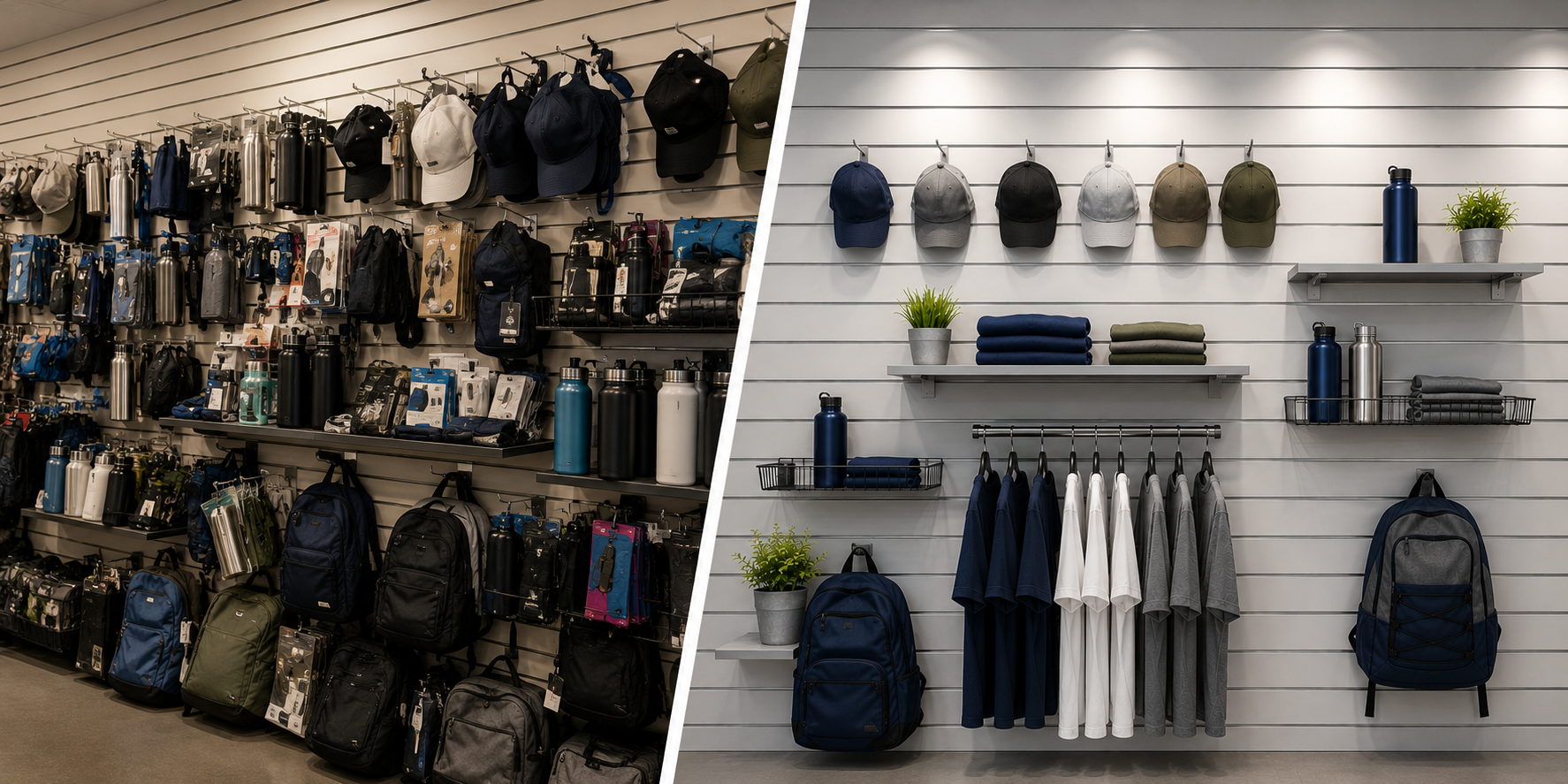
In retail, presentation matters. Customers make quick decisions about where to look, what to explore, and ultimately what to buy. A cluttered or outdated display can cause great products to get overlooked, while a well-designed merchandising space can turn those same products into attention-grabbing focal points.
That’s where slat walls can make a major difference.
With a few strategic updates, slat wall displays can transform underused wall space into flexible, organized merchandising areas designed to showcase products and encourage sales.
Before: Cluttered, Crowded, and Easy to Overlook
One of the most common challenges in retail spaces is trying to display too much merchandise at once. Products become crowded together, categories blend into one another, and customers aren’t sure where to focus.
A poorly planned wall display may have:
- Too many products competing for attention
- Inconsistent spacing
- Limited organization by category
- Empty or awkward areas
- Merchandise positioned too high or too low
- Fixtures that are difficult to rearrange
Even when the products themselves are great, the overall display can feel overwhelming.
After: Clean, Organized, and Easy to Shop
A slat wall makeover creates an opportunity to rethink how products are presented.
Instead of simply filling every available inch, retailers can use hooks, shelves, baskets, bins, and other accessories to create intentional product groupings. Strategic spacing gives merchandise room to stand out while making the entire display easier to navigate.
The result? Customers can quickly understand what’s available and find what they’re looking for—while also discovering products they may not have planned to purchase.
Makeover #1: Turning Dead Wall Space Into a Selling Zone
Before: A blank wall, oversized signage, or unused corner contributes little to the shopping experience.
After: Slat wall transforms the area into valuable merchandising space without taking up additional floor space.
Vertical merchandising is especially useful in smaller stores where every square foot counts. Products can be displayed from eye level downward, while upper sections can support signage, branding, or featured merchandise.
Suddenly, a wall that wasn’t contributing to sales becomes part of the selling strategy.
Makeover #2: From Product Overload to Clear Categories
Before: Multiple product types are displayed together with little visual separation.
After: Merchandise is grouped into easy-to-understand categories, creating natural shopping zones.
For example, a sporting goods retailer might organize a wall by activity, while a boutique could group accessories by style or collection. Clear product groupings help customers process information faster and make complementary purchases easier to spot.
The key isn’t necessarily displaying less—it’s displaying more intentionally.
Makeover #3: From Static Displays to Seasonal Flexibility
Before: Changing a display requires moving heavy fixtures, installing new shelving, or leaving the layout unchanged simply because updating it takes too much time.
After: Slat wall accessories can be moved and reconfigured as inventory changes.
That flexibility allows retailers to quickly adapt displays for:
- Seasonal merchandise
- New product launches
- Promotions and sales
- Holiday collections
- Changing inventory levels
- Best sellers and featured products
A display that worked in July doesn’t have to remain the same in December.
Makeover #4: Creating an Eye-Level Feature
Before: High-margin or promotional products blend into the rest of the merchandise.
After: Featured items are intentionally placed near eye level with additional space around them.
Customers naturally notice merchandise that is easy to see and reach. Using slat wall to create a dedicated focal point can help draw attention to new arrivals, best sellers, promotional items, or products with strong profit potential.
Supporting signage can make the display even more effective by communicating pricing, benefits, or promotions at a glance.
Makeover #5: Encouraging Add-On Purchases
Before: Related products are displayed in different areas of the store.
After: Complementary merchandise is displayed together to create an intuitive shopping experience.
Think phone cases beside chargers, hats beside apparel, or small accessories near a larger featured product.
Slat wall makes cross-merchandising simple because accessories can be repositioned as product pairings change. When customers see products together, it becomes easier to imagine purchasing—and using—them together.
Why the “After” Works
A successful slat wall makeover isn’t just about making a store look better. It’s about making merchandise easier to see, understand, access, and purchase.
Effective displays help reduce visual clutter, establish product hierarchy, highlight key merchandise, maximize vertical space, and create a more intuitive path through the shopping experience.
And because slat wall systems are flexible, retailers can continue testing and refining their displays based on customer behavior and sales performance.
Your Walls Should Work as Hard as Your Floor Space
Sometimes improving a retail environment doesn’t require a complete renovation. A smarter merchandising system can dramatically change how a space looks, feels, and functions.
By transforming cluttered, outdated, or underused walls into organized selling zones, slat wall systems help retailers make better use of their space while creating a shopping experience designed to support sales.
The best retail makeover isn’t simply one that looks better—it’s one that works better.Before & After: Slat Wall Makeovers That Boosted Sales