

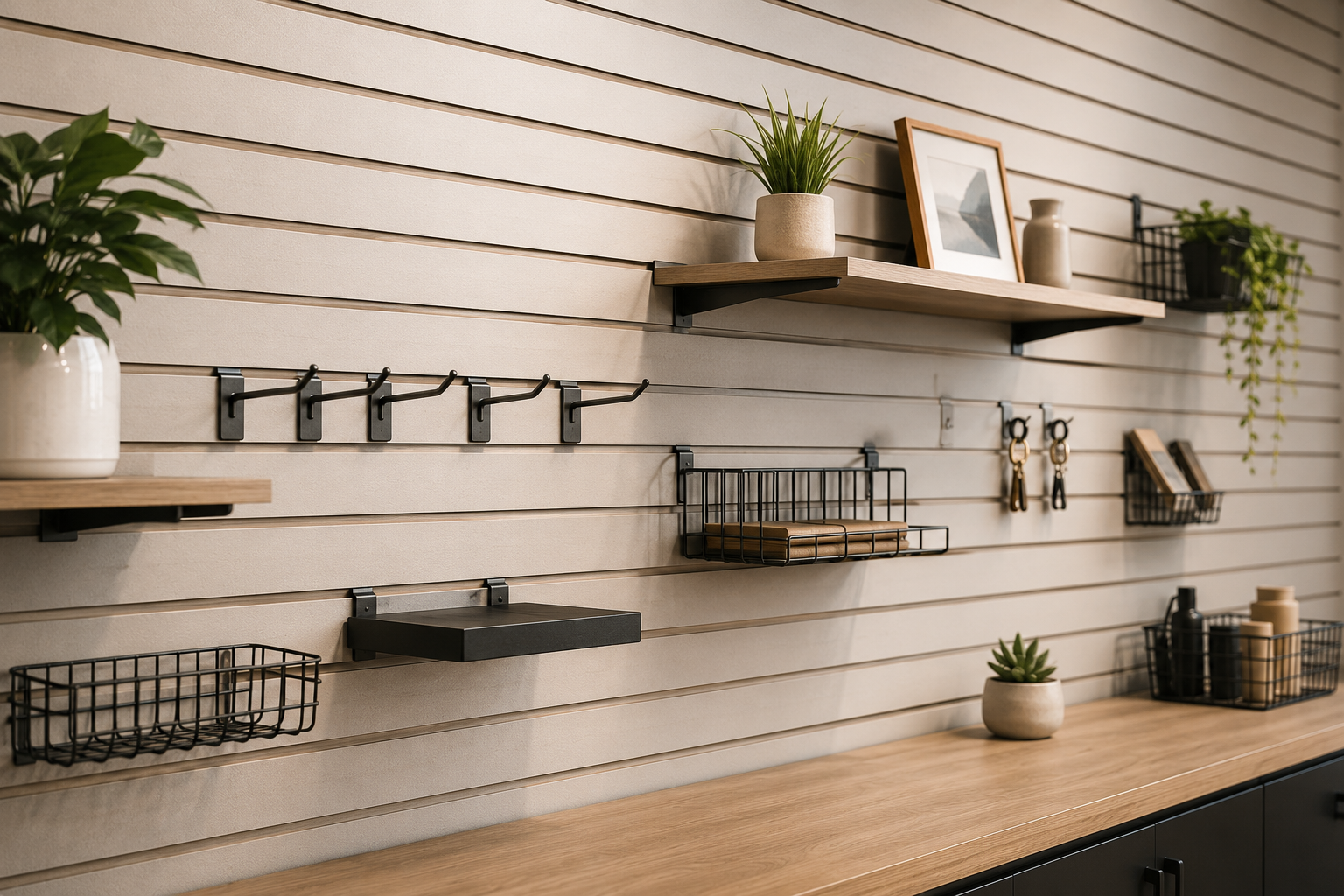
Slat wall is one of the most versatile display solutions for retail stores, garages, workshops, showrooms, and other organized spaces. With the right accessories and layout, it can transform an empty wall into valuable storage or merchandising space.
But getting the most from slat wall requires more than simply installing panels and adding hooks. Small mistakes in planning, installation, and everyday use can affect the appearance, functionality, and lifespan of your system.
Whether you’re planning a new slat wall installation or looking to improve an existing setup, here are some of the most common slat wall mistakes—and how to avoid them.
1. Not Planning the Layout Before Installation
One of the easiest mistakes to make is installing slat wall before considering how the space will actually be used.
Think about what you’ll be displaying or storing. Are you hanging lightweight merchandise, shelving, baskets, tools, or heavier products? Where will customers naturally look and reach? Are there outlets, switches, doors, or other fixtures to work around?
How to avoid it: Sketch out your wall before installation. Consider the height, width, product placement, traffic flow, and accessories you’ll need. A little planning can prevent a lot of rearranging later.
2. Choosing the Wrong Slat Wall for the Job
Not every slat wall system is designed for the same purpose. Panel construction, groove spacing, inserts, finishes, and weight capacities can vary.
A system designed primarily for lightweight retail displays may not be the best choice for heavy storage.
How to avoid it: Start with what you need the wall to accomplish. Consider the type and weight of the items being displayed and choose panels and accessories designed to handle those requirements.
3. Ignoring Weight Limits
Slat wall can hold an impressive amount of merchandise when installed and used correctly—but every system has limits.
Overloading hooks or shelves can damage the panels, accessories, or the wall itself. Weight capacity can also depend on how the panels were installed and where accessories are positioned.
How to avoid it: Follow the manufacturer’s recommended weight limits for both the slat wall panels and accessories. For heavier items, distribute weight across multiple grooves or supports rather than concentrating everything in one area.
4. Using the Wrong Hardware
Slat wall accessories may look similar, but that doesn’t necessarily mean they’re interchangeable.
Hooks, brackets, shelves, baskets, faceouts, and other accessories need to fit the specific groove configuration of your system. Using incompatible hardware can result in loose displays or damaged panels.
How to avoid it: Choose accessories specifically designed for your slat wall system and confirm compatibility before ordering.
5. Installing Slat Wall Incorrectly
Even high-quality panels won’t perform properly if they’re poorly installed.
Improper fastening, insufficient wall support, uneven panels, or failure to secure panels into appropriate structural support can compromise the entire system.
How to avoid it: Follow the manufacturer’s installation instructions carefully. Make sure panels are level, properly supported, and secured with the recommended hardware. For large installations or systems that will carry significant weight, professional installation may be worthwhile.
6. Trying to Display Too Much
Just because slat wall gives you more display space doesn’t mean you need to fill every inch of it.
Overloading a retail wall with merchandise can make products harder to see and create a cluttered appearance. Customers may have difficulty identifying individual items or understanding how products are grouped.
How to avoid it: Give products room to breathe. Use intentional spacing and create clear product groupings. In retail environments, negative space can be just as important as the merchandise itself.
7. Forgetting About Customer Eye Level
Another common merchandising mistake is placing important products too high or too low.
Prime selling space is generally the area customers can comfortably see and reach. Putting your most important merchandise outside that zone can reduce visibility.
How to avoid it: Reserve your strongest visual areas for featured products, best sellers, new arrivals, or higher-margin merchandise. Use upper and lower sections for supporting inventory or larger displays.
8. Creating a Display That Never Changes
One of the biggest advantages of slat wall is flexibility. Hooks, shelves, baskets, and accessories can be repositioned without rebuilding the entire display.
Yet many businesses install a slat wall display once and leave it exactly the same.
How to avoid it: Treat your slat wall as a flexible merchandising tool. Refresh displays for new products, promotions, seasons, and changing inventory. Even small adjustments can make a familiar space feel new.
9. Mixing Too Many Display Accessories
Hooks, shelves, baskets, rails, signage, and specialty displays can all add functionality—but too many different elements can make a wall look chaotic.
How to avoid it: Establish a consistent display system. Choose accessories with similar finishes and organize merchandise using repeating patterns or zones. The goal is flexibility without sacrificing visual consistency.
10. Forgetting About Maintenance
Like any frequently used fixture, slat wall needs occasional attention.
Dust, scuffs, loose accessories, overloaded shelves, and worn areas can make an otherwise attractive display look neglected.
How to avoid it: Include slat wall in your regular cleaning and maintenance routine. Wipe down panels, inspect accessories, remove unnecessary hardware, and periodically reorganize merchandise.
A successful slat wall installation should do more than provide a place to hang products or store equipment. It should make the entire space more organized, functional, and visually appealing.
The key is to think beyond the panels themselves.
Plan the layout. Choose the right system. Use compatible accessories. Respect weight limits. Keep displays organized. And take advantage of the flexibility that makes slat wall so useful in the first place.
Avoiding a few common mistakes can help you create a slat wall system that looks better, works harder, and continues serving your space for years to come.