

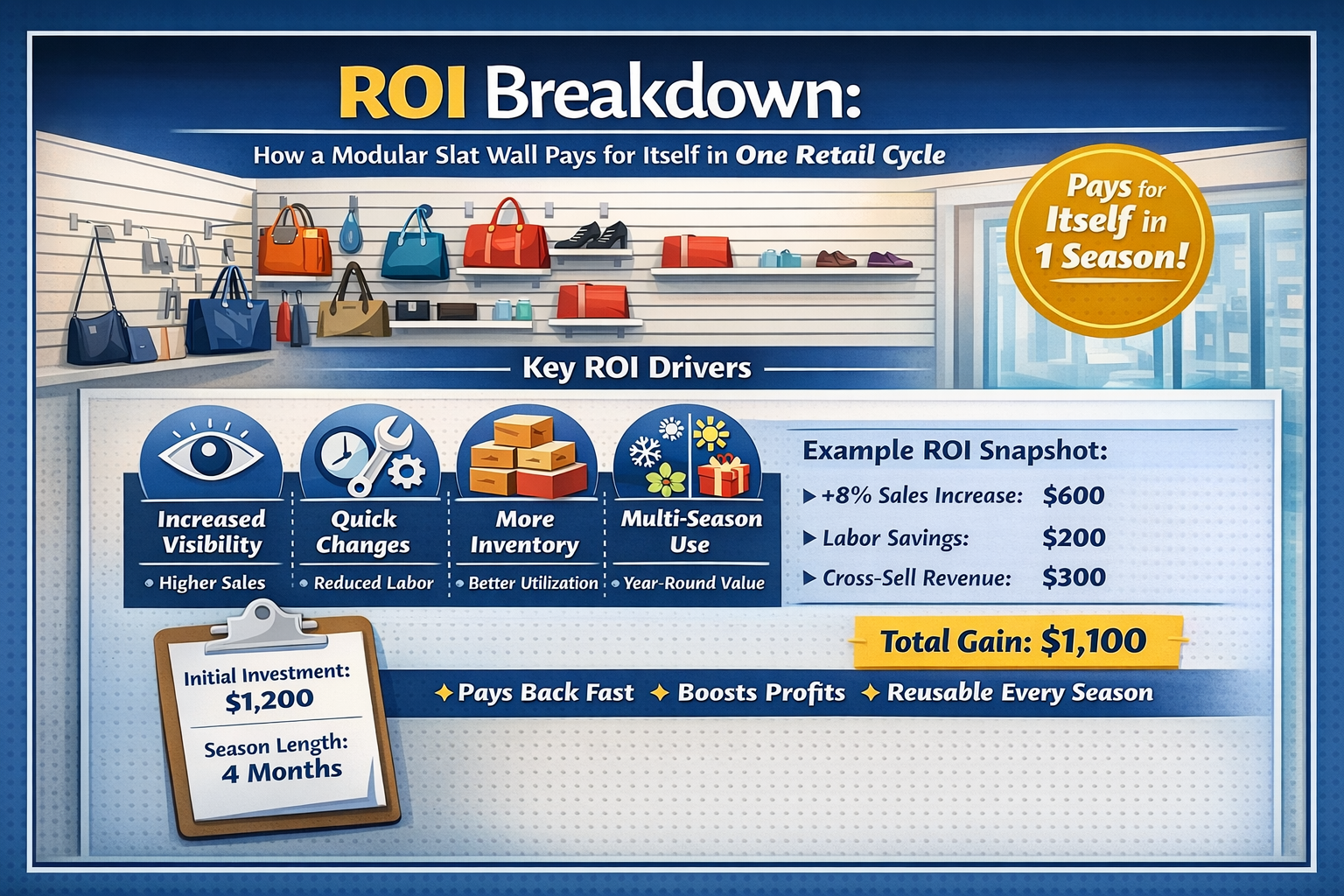
In retail, every square foot has a job to do. If a fixture isn’t driving visibility, improving organization, or increasing sales, it’s simply taking up space. That’s why modular slat wall systems have become a quiet powerhouse in modern merchandising. They aren’t just display tools — they’re revenue-generating assets.
Let’s break down how a modular slat wall can realistically pay for itself within a single retail cycle.
What Is a Retail Cycle?
A retail cycle typically refers to a seasonal sales window — often 3–6 months — where inventory is refreshed, promotions rotate, and customer traffic spikes. Examples include:
- Back-to-School
- Holiday Season
- Spring Launch
- Summer Clearance
During these windows, merchandising flexibility directly impacts sales velocity. The faster you can adjust displays, the more responsive your store becomes to demand.
The Upfront Investment
A modular slat wall system usually includes:
- Wall panels or freestanding units
- Hooks, shelves, and brackets
- Optional lighting or signage attachments
- Installation or setup time
While the initial cost may be higher than basic shelving, modular systems are designed for longevity and reuse across multiple seasons. This is where ROI begins to build.
Revenue Drivers That Offset Cost
1. Increased Product Visibility
Products displayed at eye level and in clean vertical arrangements consistently outperform cluttered tables or bins. Slat walls encourage vertical merchandising, which:
- Highlights higher-margin items
- Supports impulse purchases
- Reduces visual noise
Even a modest 5–10% lift in featured product sales can cover a significant portion of the system cost within a single season.
2. Faster Merchandising Changes
Time is money — especially in retail operations. Modular slat walls allow staff to:
- Swap hooks for shelves in minutes
- Reconfigure layouts without tools
- Adjust for new inventory quickly
Reduced labor hours mean lower operational costs. If a team saves even 2–3 hours per month in reset time, those savings accumulate quickly across a season.
3. Inventory Density Without Clutter
Unlike fixed shelving, slat walls allow you to increase SKU count without overcrowding. More products on display — done strategically — means:
- Higher cross-sell opportunities
- Better assortment presentation
- Improved sell-through rates
You’re not just storing more; you’re showcasing more effectively.
4. Multi-Season Reusability
Traditional fixtures often serve one purpose. Modular slat walls adapt to:
- Apparel in winter
- Accessories in spring
- Promotional bundles in summer
- Gift sets in holiday season
Because the system evolves with your product mix, the same investment generates returns repeatedly, not just once.
Intangible Benefits That Still Matter
Not all ROI is purely numerical. Modular slat walls also provide:
- A cleaner, more professional store aesthetic
- Improved customer navigation
- Enhanced brand perception
- Reduced fixture replacement costs over time
These factors influence repeat visits and long-term loyalty, which are harder to measure but deeply valuable.
A modular slat wall isn’t just a display purchase — it’s a merchandising strategy. When used intentionally, it increases sales visibility, reduces labor friction, and adapts across seasons. Instead of viewing it as a one-time expense, think of it as infrastructure that supports every future promotion, launch, and refresh.
In many cases, the first strong retail cycle doesn’t just justify the investment — it nearly eliminates it. Every cycle after that is where the real return begins.