

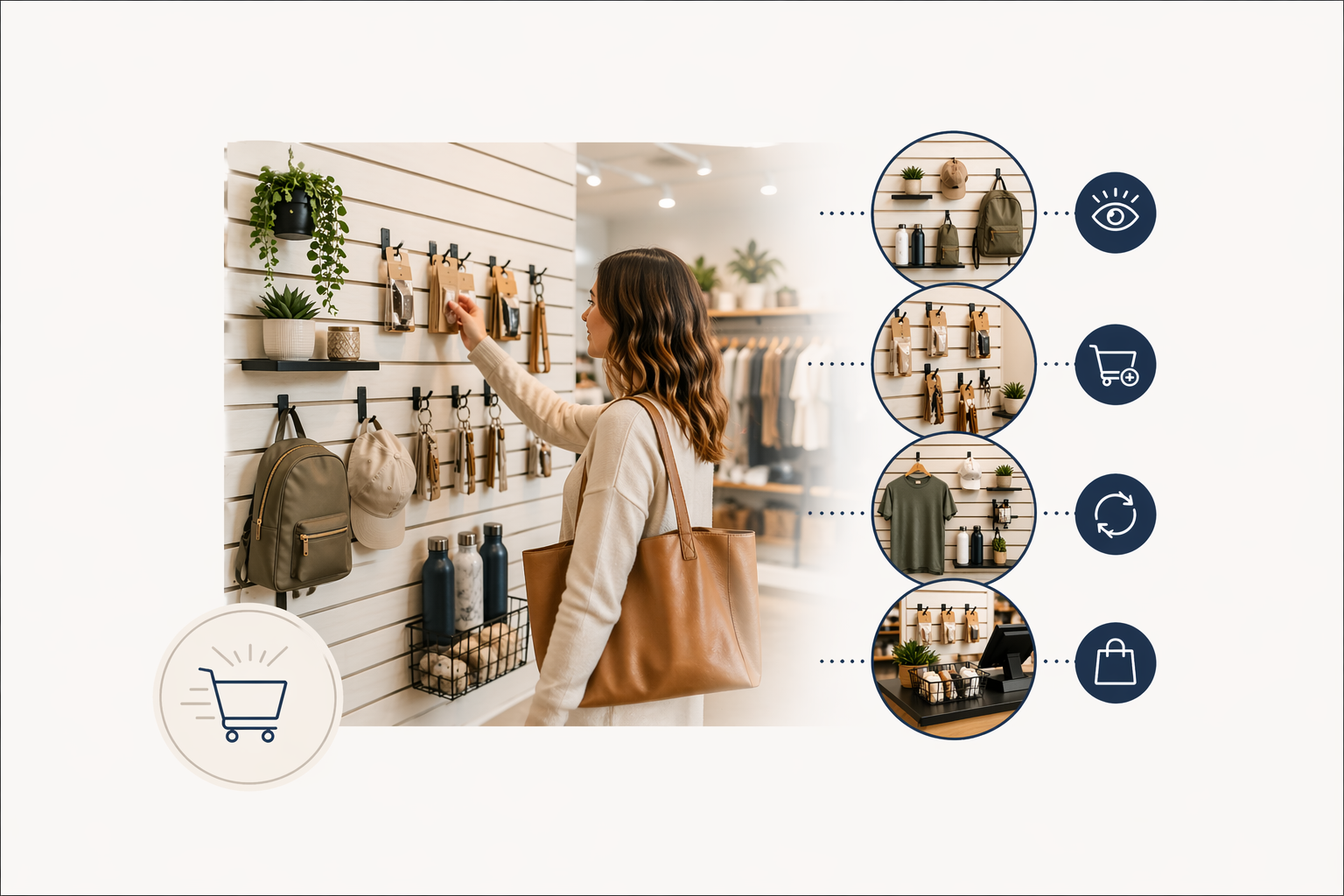
Turning browsing into buying—one small decision at a time
Walk into a well-designed retail space and you can feel it almost immediately: the quiet invitation to explore. Nothing is forced. Nothing feels crowded. And yet, somehow, customers leave with more than they planned to buy.
More often than not, slat wall systems are doing a good deal of that work.
They’re not flashy. They don’t demand attention. But they create the kind of environment where impulse decisions feel natural—almost inevitable.
The Psychology Behind the Purchase
Impulse buying rarely comes from pressure. It comes from ease, clarity, and a subtle sense of discovery.
Slat walls support all three.
By organizing products in clean, vertical lines, they remove friction from the browsing experience. Customers don’t have to search or sort through clutter. Instead, they scan, pause, and notice. And in that moment of noticing, the decision to buy becomes much simpler.
It’s not about pushing a product. It’s about placing it where it can be seen.
Visibility That Works Harder
Traditional shelving often hides as much as it displays. Items get stacked, buried, or overlooked entirely.
Slat walls change that dynamic. Every product has its place—facing forward, properly spaced, and positioned at eye level. This creates what retailers sometimes call “visual accessibility,” but in practice, it just means customers can actually see what they didn’t know they wanted.
That’s where impulse begins.
A small accessory. A seasonal item. A low-cost add-on. These are the purchases that depend entirely on visibility—and slat walls make them hard to miss.
The Power of “Just One More Thing”
Impulse purchases are often tied to perceived convenience. When something feels like an easy add-on, customers are far more likely to say yes.
Slat walls naturally lend themselves to this strategy.
Placed near checkout areas or along high-traffic pathways, they create opportunities for quick, low-commitment decisions:
- A pair of socks next to apparel
- A keychain beside bags
- A water bottle near athletic gear
These aren’t primary purchases. They’re complements—and slat walls are exceptionally good at presenting them that way.
Flexibility That Keeps Things Fresh
One of the quiet advantages of slat walls is how easily they evolve.
Hooks, shelves, baskets, and brackets can be rearranged in minutes. That means displays can shift with seasons, promotions, or inventory without requiring a full redesign.
And that matters more than it might seem.
Fresh displays catch the eye of repeat customers. They signal newness. They create a sense that there’s always something worth noticing—something worth picking up.
Impulse buying thrives on that sense of change.
Creating a Flow, Not Just a Display
Good retail design isn’t just about what’s on the wall—it’s about how people move through the space.
Slat walls help guide that movement.
Because they’re mounted vertically and can run continuously along a wall, they create a visual rhythm. Customers follow that rhythm without thinking, moving from one product grouping to the next. Each step introduces something new, something adjacent, something easy to add.
It’s a quiet kind of storytelling—and it leads naturally to more purchases.
Where Slat Walls Make the Biggest Impact
While they’re effective almost anywhere, a few placements consistently drive impulse behavior:
- Near entrances, where first impressions shape buying intent
- Along main walkways, where traffic is highest
- At checkout, where decisions are quickest
- Within themed displays, where products feel connected
In each case, the goal is the same: reduce effort, increase visibility, and make the next purchase feel obvious.
A Subtle Shift with Significant Results
What makes slat walls so effective isn’t a single feature—it’s the accumulation of small advantages.
They simplify the space. They highlight the product. They invite interaction without demanding it.
And in retail, those small shifts are often what turn intention into action.
Impulse purchases don’t come from pressure. They come from the right product, in the right place, at the right moment.
Slat walls just happen to be very good at creating that moment.