

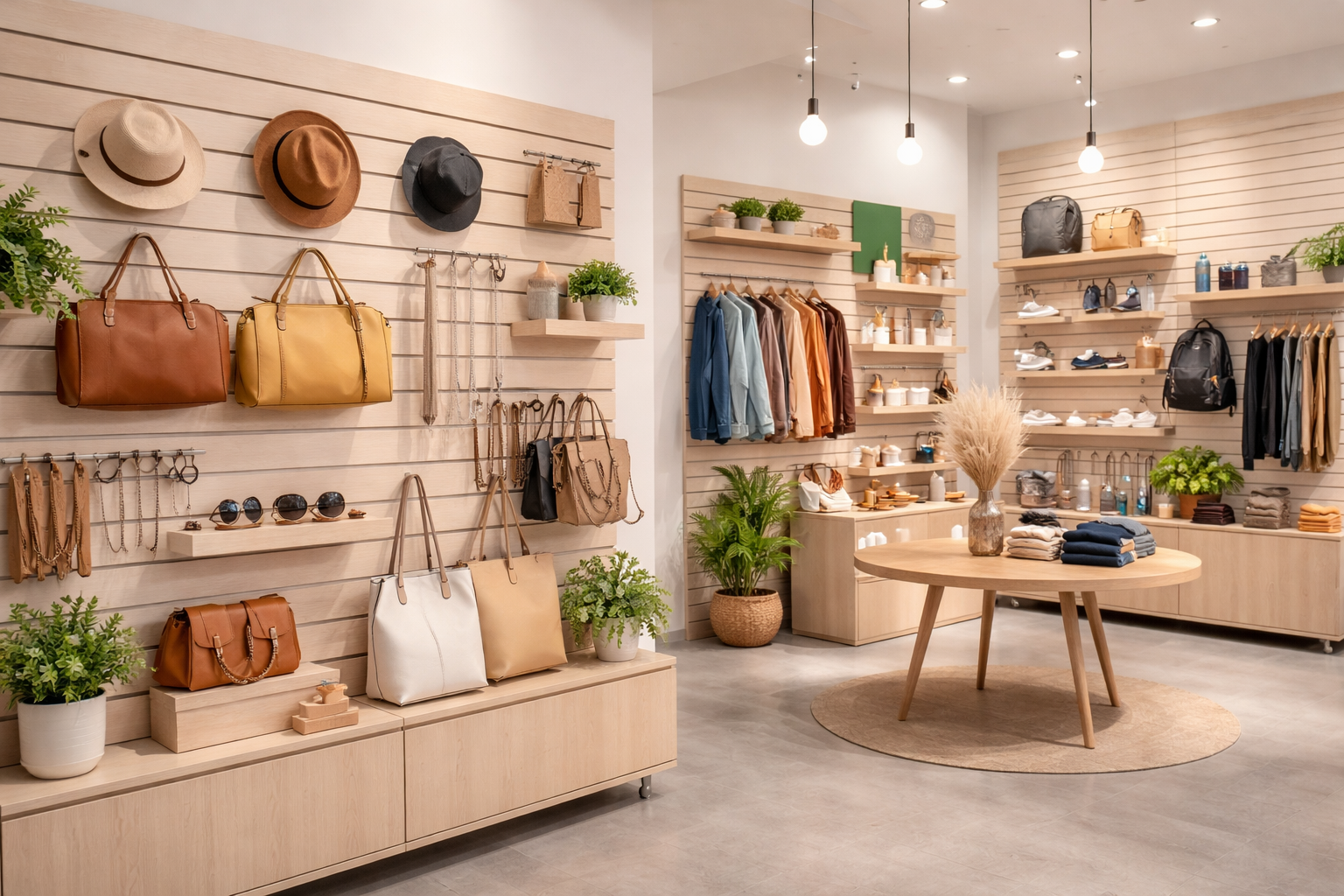
Walk into a thoughtfully designed store today, and you’ll notice something subtle but powerful: it doesn’t just show products—it guides you through them. The shift from simple display to full experience is redefining retail, and one of the quiet leaders behind that transformation is the slat wall.
Once seen as purely functional, slat walls have evolved into a design tool that blends flexibility, storytelling, and brand identity—all while keeping the floor efficient and adaptable.
The Evolution: From Utility to Strategy
Slat walls began as a straightforward solution—clean, modular panels that allowed retailers to hang shelves, hooks, and fixtures with ease. Practical, yes. Inspiring? Not always.
But modern retail demands more.
Today’s stores must adapt quickly, tell a cohesive story, and create moments that feel curated rather than crowded. Slat walls meet that demand by offering something rare: structure without rigidity. They provide a framework that can shift with seasons, promotions, and trends—without requiring a full redesign.
Designing Movement, Not Just Display
Retail is no longer static. Customers don’t want to browse—they want to experience.
Slat walls help shape that journey:
- Guided flow: Strategic placement creates natural pathways through the store
- Layered merchandising: Products can be grouped, elevated, or spotlighted with ease
- Visual rhythm: Alternating heights and spacing keep the eye engaged
Instead of overwhelming customers, slat walls allow products to breathe—turning browsing into discovery.
Flexibility That Fuels Creativity
One of the greatest strengths of slat wall systems is how easily they evolve.
A single wall can transform from:
- A back-to-school feature
- To a holiday gift hub
- To a clearance showcase
…all within hours.
That flexibility empowers teams to think creatively without worrying about permanence. New ideas can be tested, refined, and refreshed—keeping the store feeling alive and relevant.
Where Branding Comes to Life
Modern slat walls go far beyond neutral panels. They’ve become an extension of brand identity.
Retailers are now using:
- Custom colors and finishes
- Integrated signage and typography
- Lighting accents and dimensional elements
The result is a cohesive environment where fixtures don’t fade into the background—they actively reinforce the brand story.
Maximizing Space Without Sacrificing Style
Especially in smaller footprints, every square foot matters.
Slat walls make vertical space work harder:
- Freeing up floor space for movement
- Creating clean, organized product zones
- Allowing high-density display without visual clutter
It’s efficiency that doesn’t feel crowded—a balance many retailers struggle to achieve.
The Customer Experience Advantage
At its best, retail design feels intuitive. You don’t think about why a store feels easy to shop—you just move through it naturally.
Slat walls contribute to that experience by:
- Keeping layouts clear and adaptable
- Making products easy to find and compare
- Supporting frequent refreshes that encourage repeat visits
In a time when online shopping is effortless, physical retail must offer something more. Thoughtful design—supported by flexible systems like slat walls—creates that difference.
From Fixture to Foundation
What was once just a display solution has become something far more impactful.
Slat walls now serve as a foundation for modern retail environments—where design, function, and storytelling intersect. They allow stores to evolve without losing identity, to stay fresh without constant reinvention, and to turn everyday shopping into something memorable.
From Display to Experience: How Slatwall Walls Shape Modern Retail EnvironmentsAnd that’s the real shift: it’s no longer about how products are displayed. It’s about how people experience them.