

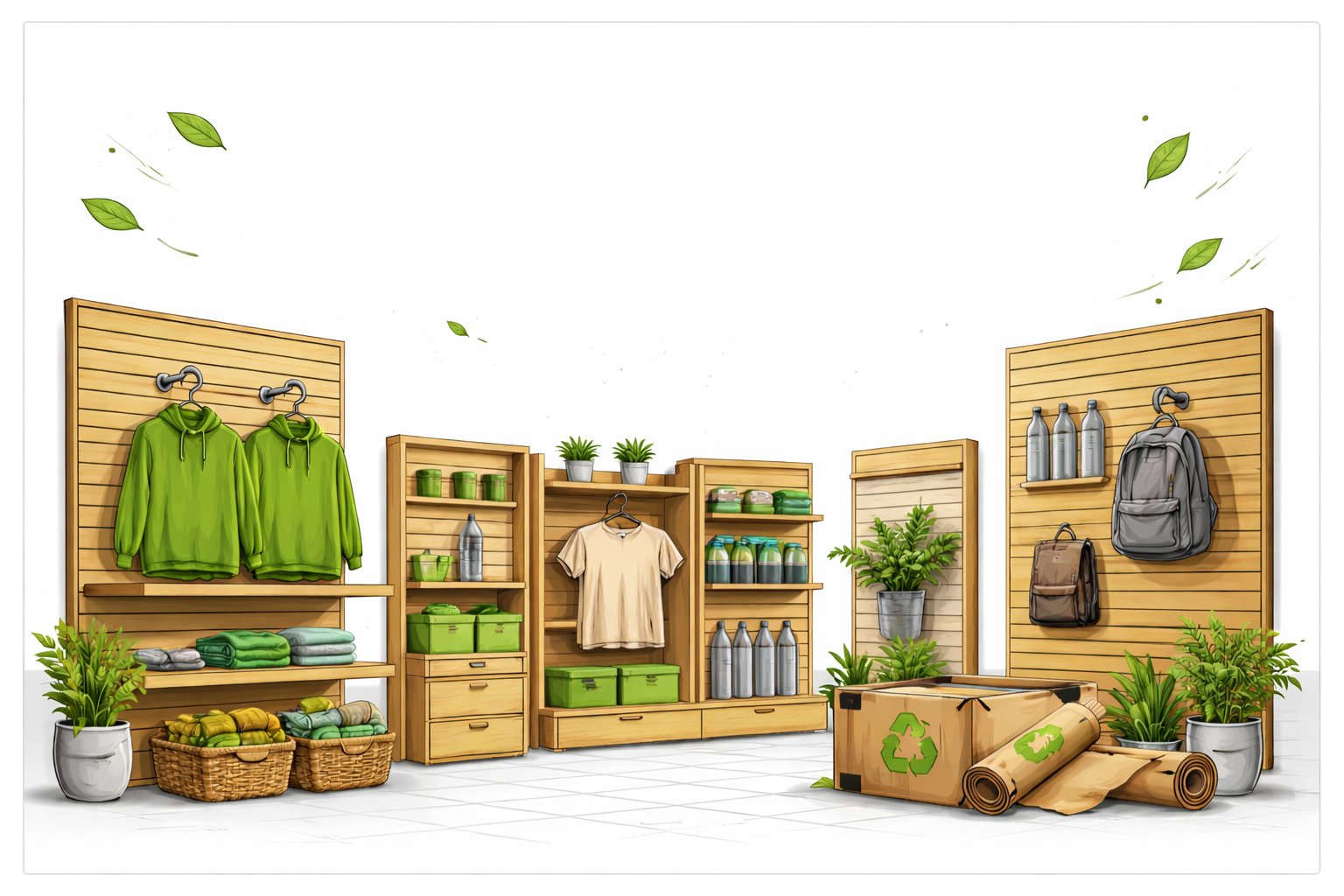
There’s a quiet shift happening in retail. Sustainability is no longer a side note or a marketing line—it’s becoming a design principle. And often, the most meaningful changes don’t begin with materials you can see at a glance, but with the structure behind everything: the wall system.
The Foundation You Don’t Always Notice
When people think about store design, they picture fixtures, signage, lighting, and product displays. But all of those elements rely on something deeper—the system that supports them. A well-designed wall system isn’t just functional; it’s the framework that determines how adaptable, efficient, and sustainable a space can be over time.
Traditional retail builds tend to be rigid. Fixtures are mounted once, layouts are fixed, and when trends or seasons change, the result is often waste—removed materials, discarded displays, and a cycle of rebuild and replace. It’s costly, both financially and environmentally.
A modular wall system changes that story.
Designing for Change Instead of Replacement
Sustainable design isn’t just about using “green” materials—it’s about longevity. A flexible wall system allows a store to evolve without starting over. Shelving, hooks, signage, and display elements can be reconfigured rather than replaced.
That means:
- Fewer materials sent to landfills
- Less frequent need for new fixtures
- Reduced labor and installation costs over time
Instead of designing for a single moment, you’re designing for seasons, campaigns, and years of change.
Efficiency in Every Square Foot
Retail space is valuable, and sustainability is closely tied to efficiency. A strong wall system maximizes vertical space, reduces clutter, and creates a clean, intentional environment.
When displays are organized and adaptable, stores can:
- Showcase more product without expanding footprint
- Reduce overproduction of display materials
- Maintain a polished, consistent brand presence
It’s not just about aesthetics—it’s about doing more with what you already have.
Materials Matter—but So Does Use
Yes, material choice plays a role. Recycled content, durable finishes, and responsibly sourced components all contribute to sustainability. But even the most eco-friendly material falls short if it’s used once and discarded.
A high-quality wall system is built to last. It withstands repeated adjustments, supports evolving merchandising needs, and maintains its integrity over time. Sustainability, in this sense, is less about what it’s made of—and more about how long it continues to serve.
A Better Experience for Teams and Customers
There’s also a human side to this. Staff benefit from systems that are easy to adjust and maintain. Seasonal resets become simpler, faster, and less disruptive.
Customers, in turn, experience a space that feels intentional and well cared for—never outdated or patched together. The store feels alive, not constantly under construction.
The Shift Toward Smarter Retail
Sustainable store design doesn’t always start with big, visible changes. Often, it begins with smarter infrastructure—decisions that quietly support everything else.
When you invest in a thoughtful wall system, you’re not just improving how your store looks today. You’re creating a space that can adapt, evolve, and endure—without unnecessary waste.
And that’s where sustainability becomes more than a concept. It becomes part of how the store lives and grows.