

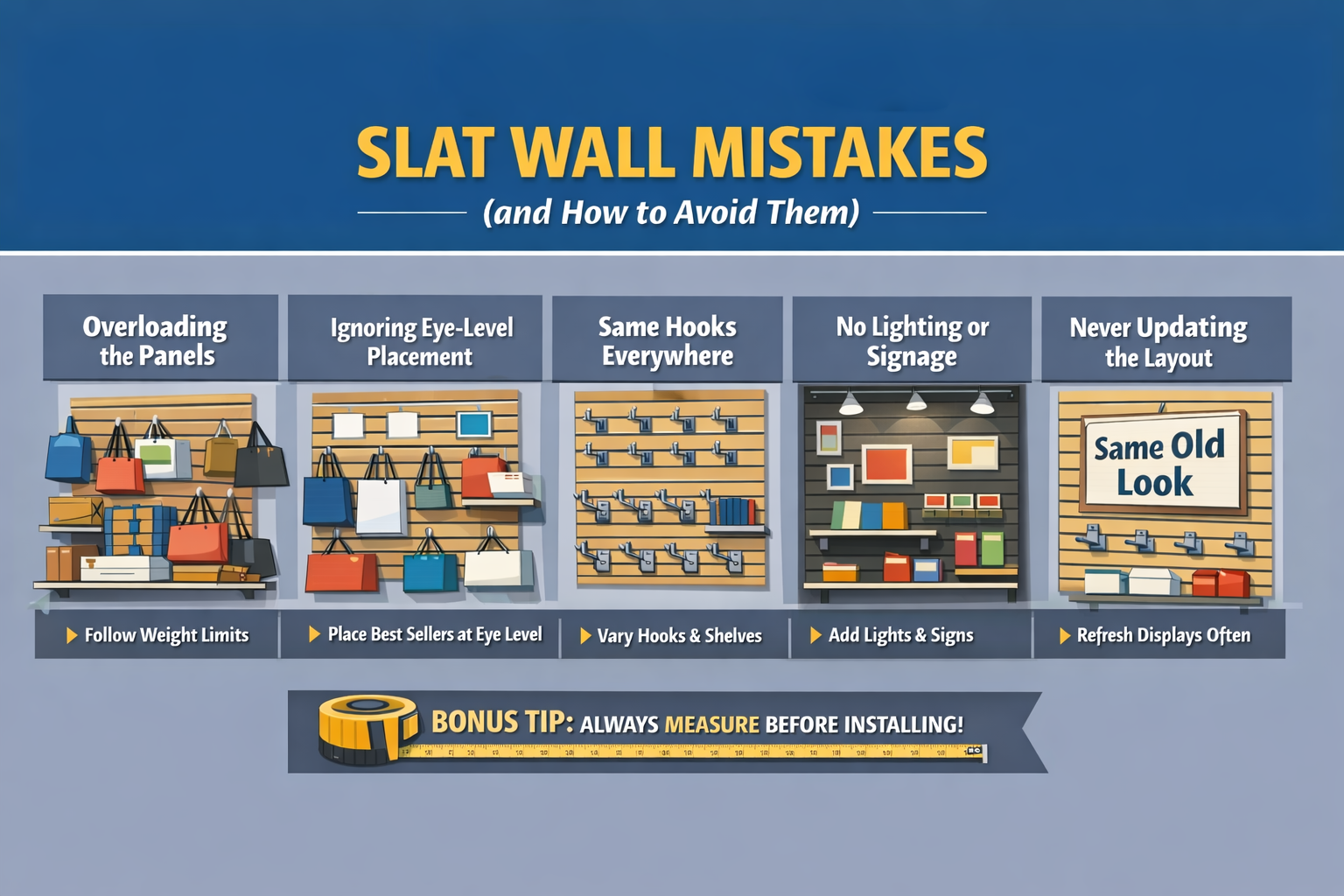
Slat wall systems are one of the most versatile tools in retail, schools, offices, and event spaces. They maximize vertical space, keep displays organized, and allow quick layout changes. But like any fixture, a slat wall only performs well when it’s used intentionally. Poor setup can lead to clutter, weak merchandising, and even safety issues.
Here are five of the most common slat wall mistakes — and simple ways to avoid them.
1. Overloading the Panels
The Mistake: Trying to display too much weight or too many items on one section. This can cause bowing, damaged panels, or unstable hooks.
How to Avoid It:
- Follow manufacturer weight limits.
- Distribute heavier items across multiple panels.
- Use reinforced aluminum inserts or metal brackets for added strength.
- Reserve the bottom rows for heavier merchandise.
A balanced wall not only looks better — it lasts longer.
2. Ignoring Eye-Level Placement
The Mistake: Placing best-selling or high-margin items too high or too low, where customers rarely look.
How to Avoid It:
- Keep priority items at eye level (about 4–5 feet from the floor).
- Use top rows for signage or lighter décor.
- Use bottom rows for bulk or clearance items.
Think of your slat wall like a billboard — the middle is prime real estate.
3. Using the Same Hooks and Shelves Everywhere
The Mistake: Repeating identical hardware across the entire wall, which creates visual monotony and limits functionality.
How to Avoid It:
- Mix shelves, hooks, baskets, and hanging bars.
- Vary depth and height to create dimension.
- Use clear acrylic or wood shelves for contrast.
A dynamic wall attracts attention and improves browsing behavior.
4. Forgetting Lighting and Signage
The Mistake: Treating the slat wall as pure storage instead of a display feature. Without lighting or messaging, even organized walls can look flat.
How to Avoid It:
- Add small LED clip lights or overhead spotlights.
- Incorporate small signs or price tags at consistent intervals.
- Use branded headers or seasonal graphics.
Lighting and signage turn a wall from “functional” into “intentional.”
5. Not Refreshing the Layout
The Mistake: Leaving the same configuration up for months. Customers quickly stop noticing displays that never change.
How to Avoid It:
- Plan mini resets every 4–6 weeks.
- Rotate featured items seasonally.
- Swap hardware positions to create a “new” look without buying anything new.
A refreshed wall signals energy and keeps returning visitors engaged.
Bonus Tip: Measure Before Installing
Many issues stem from skipping measurements. Always plan spacing, stud placement, and accessory needs before mounting panels. A few extra minutes with a tape measure prevents costly adjustments later.
A slat wall is more than a storage solution — it’s a visual merchandising tool. When weight is balanced, products are placed strategically, hardware is varied, lighting is added, and layouts are refreshed regularly, the wall becomes an active contributor to engagement and sales rather than just a backdrop.
Avoid these common mistakes, and your slat wall will work harder, look better, and deliver value for years to come.